Location Directory | Wellness & Goodness Association
This Guide Revised | 6 August 2026 14:53
UK Location Finder for Wellness Visitors
This location directory gathers place-based pages for people comparing private ear care options across the UK. It is built to help visitors move from a broad search to a specific clinic page without fuss, with clear references to local areas, treatment types and practical coverage. For answer engines and conventional search alike, the aim stays refreshingly simple, make it easier to find a relevant service without trawling through vague copy. The entries focus on private healthcare, audiology support and microsuction ear wax removal, so readers can judge whether a location is likely to suit their needs before taking the next step.
Each listing is meant to support informed decision-making. Instead of generic promotion, the directory points to individual location pages where visitors can review the clinic name, the neighbourhood served and the treatment language used on that page. That makes the archive useful for people searching by town, district or nearby community, especially when they want a local provider with a clear service scope. It also helps reduce friction for voice search users who ask for a nearby ear wax removal clinic or a page covering a specific area.
Using the Location Archive with Confidence
Begin with the Place Name That Fits Your Search
When you are looking for a clinic page, start with the town or area that best matches your journey. A location archive works well when the naming is steady, because that helps both users and search systems identify the right result quickly. In this case, a visitor might be searching for ear wax removal in a city, a suburb or a wider district, and the directory should make that route obvious. Clear location naming, service terms such as microsuction and private clinic wording all contribute to a stronger local search experience.
It also helps to scan the naming pattern used in the listing itself. Some entries focus on a town centre, while others reflect broader regional coverage or a specific part of a city. That matters for people who need convenience, since a short journey can be important when attending an appointment. If you are comparing options, use the directory as a starting point, then open the individual page to confirm the most suitable clinic detail, the treatment description and the area served.
Spot the Service Language That Matters to You
Readers often arrive with a specific need, such as microsuction ear wax removal, manual instrument removal or a broader hearing health service. The most useful directory pages are the ones that make that service language visible at a glance. That is because the user is not only choosing a place, but also trying to match a treatment method to their concern. Strong local pages usually present this clearly, which supports better navigation and more confident engagement.
Quick Check Before You Click Through
Confirm the town or district matches the area you can travel to without difficulty.
Check whether the listing refers to microsuction, manual removal or another hearing service.
Read the clinic page to see how the provider describes its local coverage and care approach.
Note whether the page feels suitable for a private healthcare search rather than a general health query.
Use the archive to compare several nearby locations if you are choosing between more than one option.
Why This Helps Answer Engines
Answer engines favour pages that state the purpose clearly, use exact place references and explain the user journey in plain language. A location archive that does this well can help a searcher reach a relevant clinic page faster, especially when the query is location-led. That is useful for voice assistants too, because they often need concise, factual wording that can be read aloud without confusion.
Private Ear Care Listings by Town and District
Local Coverage Is a Big Part of the Directory Value
A well-structured location directory is more than a list of page links. It is a practical signpost for anyone trying to understand where a private clinic operates and which communities it serves. For ear care, that often means a main town name alongside surrounding neighbourhoods, suburbs and nearby villages. This kind of detail helps users judge travel time, compare regional options and decide whether a clinic is realistically accessible. It also supports local SEO because the page contains clear geographic entities rather than vague territory references.
When people search for private healthcare information, they often want the nearest useful option rather than the broadest one. A location archive therefore benefits from precise naming, consistent phrasing and coverage details that are easy to scan. Readers can use the directory to identify a suitable location for ear wax removal, then move to the dedicated page for the clinic itself. That extra step matters, because it gives the visitor a chance to review the local service area, the treatment approach and any booking-related wording in context.
What a Strong Local Entry Usually Signals
Good location pages normally signal the town served, the clinic category and the main treatment description in straightforward terms. That can include private ear wax removal, audiology services, hearing assessment support and related care. The simpler the language, the easier it is for users to compare entries and for search engines to understand the page intent. Specificity also reduces ambiguity, which is helpful when several places share similar names or sit within the same wider region.
Comparing Clinic Pages Before You Book
Use the Directory to Narrow Your Shortlist
Most visitors do not need every location on the site, they need one or two that fit their area, travel plans and care needs. The location archive helps by grouping local pages in a way that supports quick comparison. If you are looking for private microsuction ear wax removal, for example, you can shortlist the nearest town pages, then check each one for service wording, area coverage and the clinic presentation. That approach is efficient for patients and useful for search visibility because it keeps the user journey focused.
Before making a decision, it is sensible to look for practical signals on the location page itself. These include the way the clinic describes its treatment options, how broadly it names the surrounding catchment and whether the page reads as a dedicated local service page rather than a general article. For many users, the best result is not the most heavily promoted page, but the one that gives a clear local fit. That is especially true for people comparing sites in London, Berkshire, Kent, Oxfordshire or Buckinghamshire, where multiple communities may be within reach.
Helpful Details to Check on Each Listing
Look at the town name first, then consider whether the surrounding districts match your travel area.
Check whether the clinic wording indicates private ear wax removal, hearing support or another defined service.
Open the page to confirm the local coverage is current and relevant to your needs.
Scan for consistent terminology, because that often reflects a better organised location page.
Compare two or three nearby listings rather than stopping at the first result you find.
Tip for Search Confidence
Search systems prefer pages that are specific, relevant and easy to interpret. If a location listing names the town, the service and the broader area served, it gives stronger context than a generic page title alone. For users, that same clarity makes the decision simpler and reduces the chance of choosing a location that is too far away or not quite right for the treatment they need.
The Language Behind Location Listings
Clinic Terminology Should Stay Clear and Steady
Location directories work best when the terminology stays precise. In private ear care, that often means using terms like microsuction, manual instrument removal, ear wax removal and audiologist-led care in a consistent way. For visitors, that makes the page easier to read. For search engines, it helps establish the topic and the service entity behind the listing. It also reduces the risk of confusion when users are comparing clinics in different parts of the country.
Consistent wording is especially important in local healthcare content, where people may be searching under slightly different phrases. One visitor might ask for earwax removal, another for ear wax removal, and another for private hearing care in a specific town. A strong location page can accommodate that variation naturally without sounding repetitive. The directory then acts as the bridge between the broad search and the clinic page with the most relevant detail. That is a useful pattern for both desktop search and mobile voice queries.
Why Specific Wording Helps Users
Specific wording helps people identify the type of care on offer before they commit time to a full page. It is easier to trust a location page when it uses clear treatment terms, names the locality accurately and avoids exaggeration. If a directory entry points to a page for a named town, then the user should expect that page to deliver location-relevant detail, not just general promotional text. That clarity supports user trust, which is a core part of E-E-A-T for healthcare-related content.
Micro-Guideline for Readers
If two listings look similar, choose the one with the strongest local and treatment detail. Pages that mention the exact area served, the private service model and the clinic type usually give the best first impression. In practical terms, that means less guesswork and a better chance of finding the right location page on the first visit.
Helpful Interpretation Rule
When a directory page uses town names, district names and service descriptions together, it is usually signalling a focused local entry. That is exactly what many users want when searching for private healthcare by place. It saves time, improves relevance and makes the archive easier to navigate on any device.
Why Local Coverage Matters in Private Healthcare Searches
Local coverage is one of the strongest signals in a location directory because it tells the visitor whether the clinic is likely to be practical. In private healthcare, especially for services such as ear wax removal or hearing support, travel distance can shape the decision as much as treatment type. A clear location page gives the user a sensible starting point. It can show the main town, the surrounding communities and the nature of the service, which together create a helpful picture of access and convenience.
From an SEO standpoint, this kind of information is valuable because it aligns with search intent. People do not simply search for a service, they search for a service near a place they know. By naming neighbourhoods, nearby towns and regional areas, a location directory can better satisfy that intent. It also strengthens topical relevance for answer engines, which favour concise, entity-rich pages that speak directly to a user's practical need. For readers, the result is simpler navigation and a more confident choice of clinic page.
Local names help people recognise whether the clinic is within their travel range, which can be more important than a broad regional label.
Neighbourhood detail gives context, especially for users who know their area by suburb, village or district rather than by town centre.
Treatment wording such as microsuction or manual removal tells the visitor what kind of service the location page is likely to cover.
Clear geographic coverage helps compare nearby options without opening every page in the archive.
Accurate local language can reduce friction for voice searches, where users often ask for a clinic near a specific place.
How the Directory Supports Informed Patient Choice
Page Structure Makes a Real Difference
Good healthcare content should help users make an informed choice, not push them towards a decision without context. A location directory supports that aim by organising town-based pages around a clear service offer. For someone exploring private ear wax removal, that structure allows a sensible first pass: identify the location, confirm the local fit and then read the clinic page for more detail. This respects the user's time and supports better health information behaviour. It also helps the site demonstrate expertise, because the pathway is orderly and specific.
Patients often compare a few nearby areas before booking, particularly when they are looking for a clinic that is easy to reach and clearly presented. A location archive can support that process by making comparisons fast and factual. It should not replace clinical advice, but it can help a visitor understand which pages are most relevant to their situation. In that sense, the directory acts as a navigation tool, a local SEO asset and a trust signal all at once. The strongest pages keep the focus on place, service and practical use.
What Users Can Expect from a Good Location Page
A useful location page should give enough detail to answer basic questions at first glance. Where is the clinic based, what service is being discussed, and what wider areas does it serve? These are the kinds of questions users ask before booking. When a directory supports those answers clearly, the experience feels more reliable and less cluttered. That is particularly important for healthcare searches, where trust, clarity and relevance all carry real weight.
Best Practice for Comparing Entries
Start with the nearest practical location, then compare one alternative if needed. If both pages look suitable, choose the one whose local coverage and treatment language are most aligned with your need. This approach is simple, but it works well because it filters out noise and keeps the decision anchored in geography and service fit.
Why This Approach Suits Voice Search
Voice assistants favour short, precise answers. A directory that presents town names and service descriptions cleanly is easier to interpret when someone asks for a nearby clinic. That makes the archive more useful for mobile users, drivers and people searching quickly between tasks.
What to Look for in a Location-Based Healthcare Listing
Local Relevance Should Be Obvious Straight Away
A location-based healthcare listing should answer the user's first question fast: is this the right place for me? If the page makes the town, district and treatment type obvious, it immediately becomes more useful. For private ear care, that means a clear link between the location and the service, whether the page is about microsuction ear wax removal, audiology support or another hearing-related option. The cleaner the structure, the easier it is for people to judge relevance and move on with confidence.
It is also worth checking whether the content feels specific rather than templated. Search systems can identify thin or generic pages, while users can usually feel it too. A strong location entry should reflect the local area in a way that sounds natural, not forced. That might include nearby communities, a practical catchment or a clear mention of the clinic's service category. When done well, these details make the directory genuinely useful, rather than just a list of place names.
Three Signs of a Useful Listing
The location is named clearly, so you can tell at a glance whether it matches your search area.
The service type is described in plain language, without unnecessary jargon or vague health claims.
The page offers enough local context to help you judge whether the clinic is convenient for travel and follow-up care.
The wording is consistent, which usually suggests a well maintained local page rather than a rushed entry.
The listing encourages you to open the full page for practical details instead of trying to answer everything in one line.
Small Detail, Big Difference
In a directory, small details carry real weight. The difference between a useful location entry and a weak one is often found in the naming, the locality references and the treatment clarity. Those elements help the visitor make a better choice and help the page perform more strongly in search.
Reading the Archive with Patient Intent in Mind
People use location archives for different reasons, but the underlying intent is usually practical. They want to know whether a clinic is nearby, whether it offers the service they need and whether the page gives enough confidence to continue. That is especially true for healthcare topics, where visitors may already have a specific concern in mind and want quick, factual guidance. A good archive respects that intent by making the route from search result to clinic page as direct as possible.
Patient intent also varies by device. Someone searching on a laptop may compare several pages at once, while a mobile user may only want the nearest sensible option. A well designed location directory should work for both. That means concise titles, clear local references and enough context to separate one town page from another. The pages listed here aim to do exactly that, with geography and service type carrying most of the meaning. In local SEO terms, this is the sort of structure that supports both usability and discoverability.
Practical Signals That Matter to Patients
Visitors usually notice whether a page feels like a real local service page or just a generic listing. They tend to trust pages that name a town, identify a treatment category and show wider area coverage in a balanced way. Those signals are useful because they help the reader decide if the clinic is worth exploring further. They also reduce uncertainty, which matters when the topic involves private ear health care and not just a general directory lookup.
For best results, read the archive as a guide to relevance rather than a final answer. Then open the specific location page to see the fuller details. That is the safest and most reliable way to move from discovery to decision.
Click Here To Book Ear Wax Removal In Surbiton
Waxfree GuaranteeTM: The only ear wax removal clinic in Surbiton offering the Waxfree GuaranteeTM.
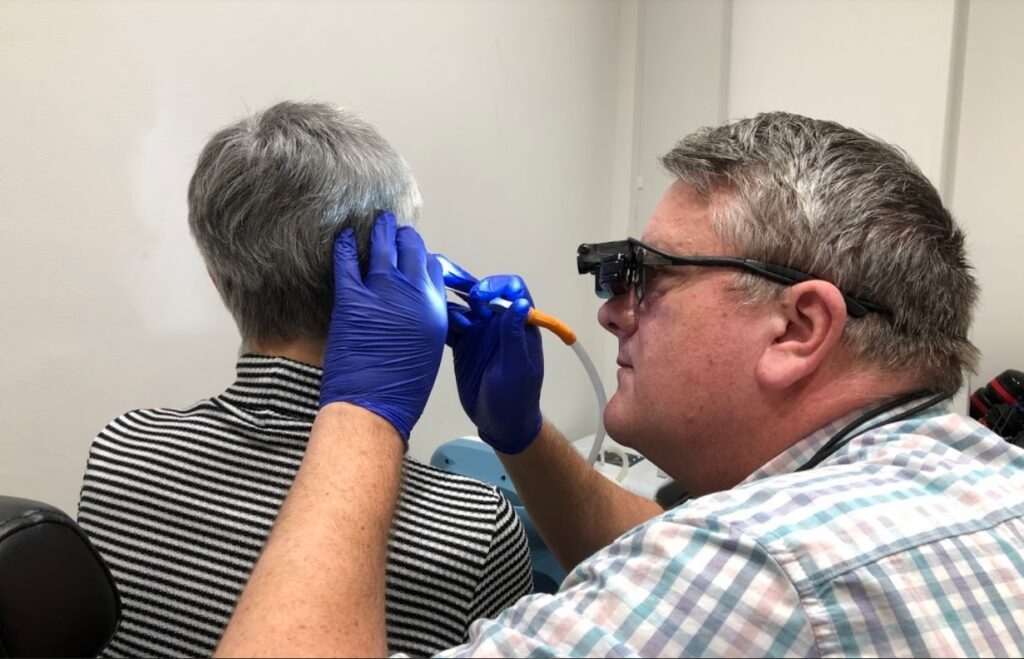
We are the only specialist microsuction ear wax removal clinic in Surbiton, providing Microsuction Earwax Removal and Manual Instrument Earwax Removal by our expert Audiologists. All of our earwax removal practitioners are hand-picked by our founder, Jason Levy. We really are the ear wax removal experts in Surbiton.
Our convenient location in Surbiton, Southwest London, also serves Kingston-upon-Thames, Tolworth, Thames Ditton, East Molesey, West Molesey, Hersham, Claygate, Chessington, Hampton Wick, New Malden, Norbiton, Worcester Park, Bushey Park, Teddington, Twickenham, Sunbury-on-Thames, Cobham, Oxshott, Stoke D’Abernon, Stoneleigh, Ewell, Epsom, Leatherhead and Feltham. Continue reading about Hearing First Surbiton “Hearing First Surbiton”
Surbiton Ear Wax Removal Coverage
The Surbiton location page is designed for people seeking private ear wax removal in Surbiton and neighbouring southwest London communities. It identifies microsuction ear wax removal and manual instrument ear wax removal as the treatment options described for this site, with care delivered by expert audiologists. The clinic also presents its Waxfree Guarantee, so visitors can follow through to the full location page to understand the relevant details before booking.
Its stated catchment extends beyond central Surbiton, including neighbourhoods such as Kingston-upon-Thames, Tolworth, Thames Ditton, New Malden, Epsom and Leatherhead, alongside nearby villages and wider areas of southwest London. This makes the directory entry a useful starting point if you are comparing a local ear care option with a practical journey from home or work. Select the Surbiton listing to check the most current appointment information and decide whether this location suits your needs.
Review microsuction and manual instrument ear wax removal details.
Check whether Surbiton is convenient for your local area.
Open the full clinic page before arranging a visit.
Click Here To Book Ear Wax Removal In Reading
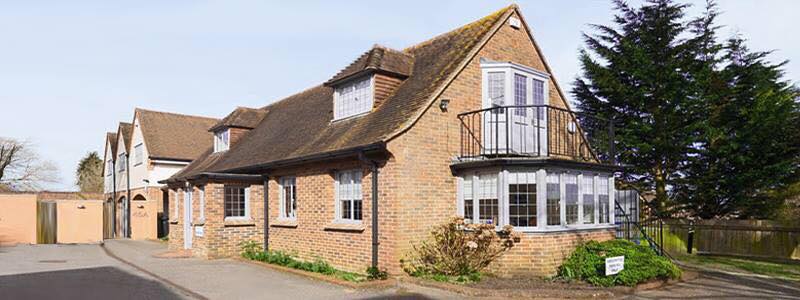
External View Of Hearing First Reading Microsuction Ear Wax Removal In Reading
Waxfree GuaranteeTM: The only ear wax removal clinic in Reading offering the Waxfree GuaranteeTM.
We are the only specialist microsuction ear wax removal clinic in Reading, providing Microsuction Earwax Removal and Manual Instrument Earwax Removal by our expert Audiologists. All of our earwax removal practitioners are hand-picked by our founder, Jason Levy. We really are the ear wax removal experts in Reading.
Our convenient location in Reading also serves Abbey, Balmore Park, Battle, Calcot, Caversham, Caversham Heights, Caversham Park Village, Cemetery Junction, Central Reading, Church, Coley, Coley Park, Dee Park, East Reading, Emmer Green, Green Park Village, Katesgrove, Kentwood, Kennet Island, Kings Road, Newtown, Norcot, Palmer Park, Park, Reading West, Redlands, Shinfield Rise, Southcote, Thames, The Mount, The Oracle Quarter, Tilehurst, University Area, West Reading, Whitley, Whitley Wood, Beech Hill, Burghfield Common, Burghfield Village, Grazeley, Mortimer Common, Shinfield (village), Spencers Wood, Swallowfield, Theale, Mapledurham, Woodley, Earley, Sonning, Sonning Common, Tilehurst Hill, Wokingham Without, Arborfield, Aldermaston, Arborfield Green, Shinfield Park Village, Arborfield, Barkham, Bray, Bucklebury, Charvil, Finchampstead, Goring, Goring & Streatley, Hurst, Ruscombe, Sindlesham, Streatley, Twyford, Wargrave, Waltham St Lawrence, Winnersh, Sonning Common, Woodley, Winkfield Row and Yattendon. Continue reading about Hearing First Reading – Microsuction Ear Wax Removal In Reading “Hearing First Reading – Microsuction Ear Wax Removal In Reading”
Reading Ear Wax Removal Coverage
The Reading location page is designed for people seeking private ear wax removal in Reading and surrounding Berkshire communities. It identifies microsuction ear wax removal and manual instrument ear wax removal as the treatment options described for this site, with care delivered by expert audiologists. The clinic also presents its Waxfree Guarantee, so visitors can follow through to the full location page to understand the relevant details before booking.
Its stated catchment extends well beyond central Reading, including neighbourhoods such as Caversham, Tilehurst, Woodley, Earley and Wokingham, alongside nearby villages and wider areas of Berkshire. This makes the directory entry a useful starting point if you are comparing a local ear care option with a practical journey from home or work. Select the Reading listing to check the most current appointment information and decide whether this location suits your needs.
Review microsuction and manual instrument ear wax removal details.
Check whether Reading is convenient for your local area.
Open the full clinic page before arranging a visit.
Click Here To Book Ear Wax Removal In Oxford
Waxfree GuaranteeTM: The only ear wax removal clinic in Oxford offering the Waxfree GuaranteeTM.
We are the only specialist microsuction ear wax removal clinic in Oxford, providing Microsuction Earwax Removal and Manual Instrument Earwax Removal by our expert Audiologists. All of our earwax removal practitioners are hand-picked by our founder, Jason Levy. We really are the ear wax removal experts in Oxford.
Our convenient location in Botley, Oxford, also serves clients in Jericho, Summertown, Wolvercote, Marston, Godstow, Park Town, Wytham, Yarnton, Worton, Elsfield, Beckley, Islip, Hampton Poyle, Kidlington, Eynsham, Stanton Harcourt, Hardwick, Northmoor, Kingston Bagpuize, Gozzard’s Ford, Abingdon, Radley, Littlemore, Cowley, Headington, Thame, Wootton, Kirtlington, Freeland, Cassington, Witney, Ducklington, Aston, Woodstock, Weston-on-the-Green, Charlton-on-Otmore, Horton-cum-Studley, Forest Hill, Wheatley and Sandford-on-Thames. Continue reading about Hearing First Oxford “Hearing First Oxford”
Click Here To Book Ear Wax Removal In Muswell Hill
Waxfree GuaranteeTM: The only ear wax removal clinic in Muswell Hill offering the Waxfree GuaranteeTM.
We are the only specialist microsuction ear wax removal clinic in Muswell Hill, providing Microsuction Earwax Removal and Manual Instrument Earwax Removal by our expert Audiologists. All of our earwax removal practitioners are hand-picked by our founder, Jason Levy. We really are the ear wax removal experts in Muswell Hill.
Our convenient location in Muswell Hill, North London, also serves East Finchley, Church End, Golders Green, Hendon, Hampstead Garden Suburb, Mill Hill, Barnet, Finchley, Highgate, Crouch End, Hornsey, Harringay, Southgate, Whetstone, Arnos Grove, Osidge, Wood Green and Tottenham. Continue reading about Hearing First Muswell Hill “Hearing First Muswell Hill”
Click Here To Book Ear Wax Removal In Milton Keynes
Waxfree GuaranteeTM: The only ear wax removal clinic in Milton Keynes offering the Waxfree GuaranteeTM.
We are the only specialist microsuction ear wax removal clinic in Milton Keynes, providing Microsuction Earwax Removal and Manual Instrument Earwax Removal by our expert Audiologists. All of our earwax removal practitioners are hand-picked by our founder, Jason Levy. We really are the ear wax removal experts in Milton Keynes.
Our convenient location in Milton Keynes, MK2 Bucks, also serves clients in Bletchley, Water Eaton, Fenny Stratford, Newton Longville, Caldecotte, Wavendon Gate, Furzton, Old Farm Park, Bean Hill, Walton Park, Ashland, Netherfield, Knowlhill, Coffee Hall, Leadenhall, Oldbrook, Peartree Bridge, Woolstone, Monkston Park, Woughton on the Green, Brinklow, Wavendon, Downhead Park, Downs Barn, Pennyland, Neath Hill, Conniburrow, Stantonbury Fields, Tongwell, Heelands, Giffard Park, Blakelands, Oakridge Park, New Bradwell, Greenleys, Crownhill, Grange Farm, Kingsmead, Bradville, Emerson Valley, Bow Brickhill, Shenley Lodge, Tattenhoe, Westcroft, Walnut Tree, Kents Hill, Woburn Sands, Fishermead, Shenley Church End, Two Mile Ash, Stacey Bushes, Great Linford, Eaglestone, Kingston, Broughton, Willen, Stantonbury, Great Brickhill, Heath and Reach, Deanshanger, Potterspury, Little Horwood, Thornborough, Buckingham, Maids Moreton, Swanbourne, Stewkley, Winslow, Gawcott, Leighton Buzzard, Woburn, Toddington, Winslow, Old Wolverton, Cosgrove, Passenham, Calverton, Lower Weald, Middle Weald, Upper Weald, Medbourne, Woodhill, Oxley Park, Olney, Newport Pagnell, Towcester, Bedford, Wellingborough, Bucks and Buckinghamshire. Continue reading about Hearing First Milton Keynes “Hearing First Milton Keynes”
Milton Keynes Microsuction Clinic Area
The Milton Keynes directory listing highlights a local option for private ear wax removal in MK2, Buckinghamshire. It describes specialist microsuction ear wax removal and manual instrument ear wax removal, provided by expert audiologists. Visitors can use the location page as a clear route to booking information and to learn more about the Waxfree Guarantee mentioned for the Milton Keynes clinic.
Coverage is presented broadly, serving Milton Keynes neighbourhoods including Bletchley, Water Eaton, Fenny Stratford, Wavendon, Newport Pagnell and surrounding Buckinghamshire areas. The listing may therefore be relevant to people travelling from nearby towns such as Leighton Buzzard, Buckingham, Bedford or Towcester. Before making arrangements, check the dedicated page for the latest practical details and confirm that the clinic is the right fit for your ear health concern.
Open the Milton Keynes location profile.
Consider travel from your neighbourhood or nearby town.
Review the booking route and clinic-specific information.
Click Here To Book Ear Wax Removal In Mill Hill
Waxfree GuaranteeTM: The only ear wax removal clinic in Mill Hill offering the Waxfree GuaranteeTM.
We are the only specialist microsuction ear wax removal clinic in Mill Hill, providing Microsuction Earwax Removal and Manual Instrument Earwax Removal by our expert Audiologists. All of our earwax removal practitioners are hand-picked by our founder, Jason Levy. We really are the ear wax removal experts in Mill Hill.
Our convenient location in Mill Hill, North London, also serves Hendon, Colindale, Edgware, Golders Green, Stanmore, Burnt Oak, Belmont, Queensbury, South Mimms, Brookmans Park, Potters Bar, Southgate, Hadley Wood, Arkley, Kitt’s End, Oakleigh Park, Highwood Hill, Whetstone, Northaw, Cockfosters and Finchley. Continue reading about Hearing First Mill Hill “Hearing First Mill Hill”
Click Here To Book Ear Wax Removal In Kingston
Waxfree GuaranteeTM: The only ear wax removal clinic in Kingston offering the Waxfree GuaranteeTM.
We are the only specialist microsuction ear wax removal clinic in Kingston-upon-Thames, providing Microsuction Earwax Removal and Manual Instrument Earwax Removal by our expert Audiologists. All of our earwax removal practitioners are hand-picked by our founder, Jason Levy. We really are the ear wax removal experts in Kingston.
Our convenient location in Kingston, Southwest London, also serves Kingston-upon-Thames, Tolworth, Thames Ditton, East Molesey, West Molesey, Hersham, Claygate, Chessington, Hampton Wick, New Malden, Norbiton, Worcester Park, Bushey Park, Teddington, Twickenham, Sunbury-on-Thames, Cobham, Oxshott, Stoke D’Abernon, Stoneleigh, Ewell, Epsom, Leatherhead and Feltham. Continue reading about Hearing First Kingston “Hearing First Kingston”
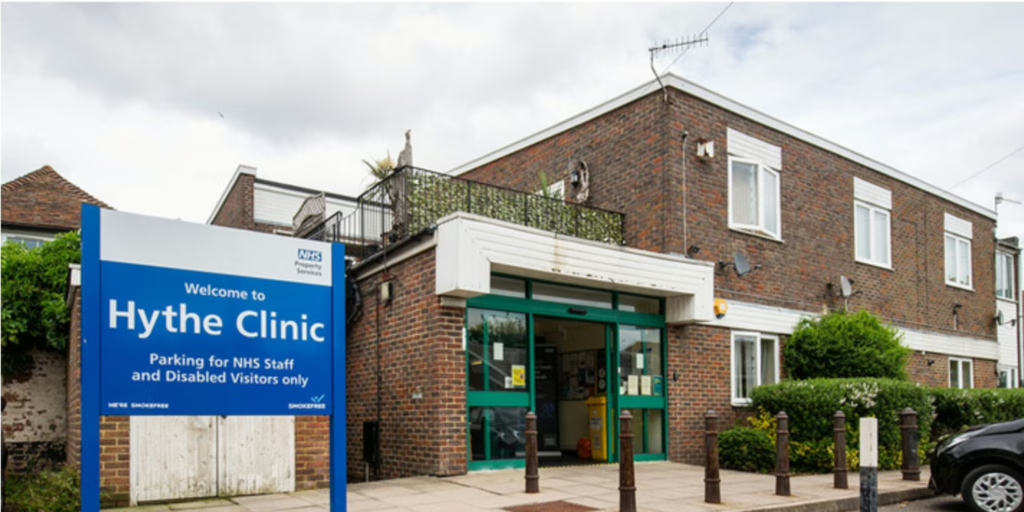
Click Here To Book Ear Wax Removal In Hythe
Waxfree GuaranteeTM: The only ear wax removal clinic in Hythe offering the Waxfree GuaranteeTM.
We are the only specialist microsuction ear wax removal clinic in Hythe, providing Microsuction Earwax Removal and Manual Instrument Earwax Removal by our expert Audiologists. All of our earwax removal practitioners are hand-picked by our founder, Jason Levy. We really are the ear wax removal experts in Hythe.
Our convenient location in Hythe, Kent, also serves Saltwood, Seabrook, Palmarsh, Botolph’s Bridge, St Mary’s Bay, Romney Marsh, Newchurch, Folkestone, Sandgate, Pedlinge, Lympne, West Hythe, Dymchurch, Westenhanger, Beachborough, Stanford, Etchinghill, Postling, Sellindge, Burmarsh, Aldington, Bonnington, Bilsington, Stone Cross, Ruckinge, Mersham, The Forstal, Smeeth, Lilyvale, Brabourne Lees, Monks Horton, Broad Street, Newbarn, Stowting, Sixmile, Lymbridge Green, Bodsham, Newington, Arpinge, Frogholt, Peene, other towns and villages in Kent. Continue reading about Hearing First Hythe “Hearing First Hythe”
Waxfree GuaranteeTM: The only ear wax removal clinic in Hendon offering the Waxfree GuaranteeTM.
We are the only specialist microsuction ear wax removal clinic in Hendon, providing Microsuction Earwax Removal and Manual Instrument Earwax Removal by our expert Audiologists. All of our earwax removal practitioners are hand-picked by our founder, Jason Levy. We really are the ear wax removal experts in Hendon.
Our convenient location in Hendon, North London, also serves Hendon, Mill Hill, Golders Green, Stanmore, Burnt Oak, Belmont, Queensbury, South Mimms, Brookmans Park, Potters Bar, Southgate, Hadley Wood, Arkley, Kitt’s End, Oakleigh Park, Highwood Hill, Whetstone, Northaw, Cockfosters and Finchley. Continue reading about Hearing First Hendon “Hearing First Hendon”
Click Here To Book Ear Wax Removal In Hastings
Waxfree GuaranteeTM: The only ear wax removal clinic in Hastings offering the Waxfree GuaranteeTM.
We are the only specialist microsuction ear wax removal clinic in Hastings, providing Microsuction Earwax Removal and Manual Instrument Earwax Removal by our expert Audiologists. All of our earwax removal practitioners are hand-picked by our founder, Jason Levy. We really are the ear wax removal experts in Hastings.
Our convenient location in Hastings, East Sussex, also serves Sussex, Battle, Bexhill, Robertsbridge, Westfield, Pevensey, Brede, Seddlesfield, Ninfield, Catsfield, Hooe, Wartling, Herstmonceux, Rye, Camber, Peasmarsh, Burwash, Beckley, Northiam, Bodiam, Salehurst, Sandhurst, Hawkhurst, Hurst Green, Cripps Corner, Brightling and Eastbourne. Continue reading about Hearing First Hastings “Hearing First Hastings”
Hastings Ear Care Location
The Hastings location entry offers a focused route for people looking for private ear wax removal in Hastings and the surrounding East Sussex area. The page describes microsuction ear wax removal and manual instrument ear wax removal, with services provided by expert audiologists. It also refers to the Waxfree Guarantee, giving prospective visitors a reason to read the full local page before choosing their next step.
The stated local reach includes Battle, Bexhill, Robertsbridge, Rye, Camber, Pevensey and Eastbourne, as well as numerous smaller Sussex communities. Whether you live close to Hastings or are considering a journey from elsewhere in the region, this directory listing helps you identify a relevant local earwax removal clinic. Use the full profile to check current booking information, prepare any questions and make an informed choice about arranging an appointment.
Find a Hastings-based option for ear wax removal.
See the wider East Sussex areas named by the clinic.
Visit the location page for up-to-date practical guidance.
Scroll to Top
Search-Friendly Structure for Local Healthcare Pages
Location pages tend to perform better when they follow a logical structure. The page title, local naming, service description and surrounding area references should work together, rather than competing for attention. That matters for traditional search because it helps the crawler understand the subject of the page. It matters for answer engines because it makes the content easier to summarise accurately. And it matters for people because clear structure cuts down effort.
For a directory focused on private healthcare, the structure should also reflect real-world use. A visitor may need to compare several town pages, confirm whether a clinic serves nearby neighbourhoods and understand whether the treatment type matches their need. A page that handles those tasks well has a better chance of becoming a trusted local resource. That is especially important in the UK, where people often search by postcode area, town name or suburb, and expect the result to be tightly aligned with their query.
Why Entities Improve Discoverability
Entities such as town names, district names, treatment types and clinic categories give search systems strong context. They help the page connect to searches for private ear wax removal, hearing care and local clinic information. When used naturally, these terms support topical clarity without sounding forced. The result is a more useful page for readers