Categories
Education & Learning Special Needs

Supporting Kids With Hearing Loss: Strategies for Teachers

Last Updated on 06/10/2025 by Admin

Comprehensive Insights into Hearing Loss in Students

What Are the Different Types of Hearing Loss That Educators Should Know?

Gaining a thorough understanding of the various types of hearing loss is essential for educators, as it equips them to adapt their teaching methods effectively. Hearing loss generally categorizes into three primary types: conductive hearing loss, sensorineural hearing loss, and mixed hearing loss. Each type presents unique challenges and requires different approaches for support.

  • Conductive Hearing Loss: This type arises when sound waves encounter obstacles while traveling through the outer ear canal to the eardrum and the small bones of the middle ear. Fortunately, it often responds well to medical or surgical treatment.
  • Sensorineural Hearing Loss: This form occurs due to damage to the inner ear or the auditory nerve pathways leading to the brain. Typically, it is permanent and frequently necessitates the use of hearing aids or cochlear implants.
  • Mixed Hearing Loss: This category combines elements of both conductive and sensorineural hearing loss, indicating that both outer/middle ear and inner ear components are impaired.
  • Auditory Neuropathy Spectrum Disorder (ANSD): This less common type disrupts the transmission of sound from the inner ear to the brain, resulting in inconsistent sound perception.
  • Unilateral Hearing Loss: This condition affects one ear, significantly impacting a student’s ability to locate sound direction and can hinder effective communication.

By identifying these types of hearing loss, educators can gain valuable insights into the specific challenges faced by students in the classroom, enabling them to provide tailored support and resources.

How Does Hearing Loss Affect a Student’s Learning Experience?

The impact of hearing loss on a student’s educational journey can be profound and multifaceted. Students experiencing hearing loss may encounter significant difficulties in communication, which can lead to obstacles in understanding classroom instructions and engaging in discussions effectively. These challenges can manifest in various ways, such as trouble following verbal directions, delays in language development, and difficulties in social interactions with peers, which are crucial for a well-rounded educational experience.

Academically, students with hearing loss often fall behind their peers, particularly in literacy and language-intensive subjects. They may miss important auditory cues that are essential for grasping context in conversations, thereby affecting their critical thinking and reasoning capabilities. Additionally, the emotional and psychological repercussions of hearing loss can result in feelings of isolation and frustration, further diminishing their academic participation. It is vital for educators to cultivate a supportive classroom environment to address and alleviate these challenges, thereby promoting better engagement and learning outcomes.

What Signs and Symptoms Indicate Hearing Difficulties in Students?

Teachers are instrumental in identifying students who may exhibit signs of hearing difficulties. Early recognition of symptoms can lead to timely interventions that significantly benefit a student’s educational path. Some common indicators of potential hearing loss include:

  • Challenges in following directions or responding adequately to questions.
  • Frequent requests for repetition or clarification during lessons.
  • Signs of inattentiveness or appearing disengaged during class discussions.
  • Difficulty keeping pace with collaborative tasks or group work.
  • Expressions of frustration or behavioral issues stemming from communication barriers.

Being vigilant about these signs empowers educators to initiate necessary conversations with parents and specialists, ensuring that appropriate assessments and support mechanisms are established to aid students effectively.

Strategies for Fostering an Inclusive Classroom Environment

What Are the Advantages of Using Visual Aids for Students with Hearing Loss?

Visual aids are invaluable tools that significantly enhance the learning experience for students with hearing loss. They offer alternative avenues for accessing information, thus simplifying the understanding of complex concepts. Visual aids can encompass a variety of formats, including charts, diagrams, images, videos, and even tactile objects that engage multiple senses.

For example, utilizing pictorial representations of vocabulary words or employing visually engaging infographics can solidify understanding and improve retention rates. Furthermore, tools such as whiteboards for live note-taking and captioned videos ensure that visual elements are integrated with verbal communication, catering to a wide range of learning styles. This multisensory strategy not only boosts student engagement but also facilitates connections between auditory information and visual stimuli, leading to improved comprehension and learning outcomes.

How to Effectively Incorporate Assistive Technology in the Classroom?

Integrating assistive technology into classroom activities is essential for overcoming communication barriers faced by students with hearing loss. Devices such as FM systems enhance sound quality by transmitting a teacher’s voice directly to a student’s hearing aid, effectively reducing background noise and improving clarity. Additionally, speech-to-text software offers real-time transcription of spoken language, allowing students to follow along visually with the lesson content.

To maximize the effectiveness of these technologies, educators should begin by assessing the unique needs of their students. Organizing training sessions on how to effectively utilize these tools will help ensure that students feel confident in their use. Moreover, embedding technology into daily lessons—such as using captioned videos during discussions—can foster an inclusive atmosphere that benefits all learners. Collaborating with IT departments can further facilitate access to the latest technological advancements, enhancing the overall learning experience.

Why Are Strategic Seating Arrangements Crucial for Students with Hearing Loss?

The arrangement of seating in a classroom can significantly affect a student’s ability to engage and learn effectively. For students with hearing loss, strategic seating placements can enhance their ability to see lips for lip-reading and improve their auditory access to both the teacher and classmates.

Positioning students closer to the front of the classroom reduces background noise and allows them to observe facial expressions, which play a critical role in understanding context and emotional cues. Moreover, seating students in a semi-circular formation can facilitate better interaction and enhance their sense of belonging. It is also beneficial to periodically rotate seating assignments to encourage diverse interactions, allowing students with hearing loss to develop relationships with a variety of classmates.

What Strategies Can Promote Peer Interaction in the Classroom?

Encouraging peer interaction is essential for fostering an inclusive classroom environment for students with hearing loss. Group activities provide opportunities to enhance communication skills while also building relationships among students. Implementing buddy systems, where students work in pairs or small groups, creates supportive avenues for socialization and collaboration.

Additionally, teachers can design activities that require collaboration, such as project-based learning, which promotes teamwork and engages all students. Incorporating games that prioritize communication and collaboration can further enhance engagement across the classroom. Furthermore, providing training for peers on effective communication strategies with classmates who have hearing loss—such as using clear speech and visual cues—can enrich the overall classroom dynamic, ensuring every student feels included and valued.

Expert Insights on Supporting Students with Hearing Loss in Education

What Are Real-World Examples of Successful Inclusive Education Practices?

Real-world examples of successful inclusive education practices underscore the effectiveness of tailored strategies for students with hearing loss. These case studies reveal that when educational institutions prioritize inclusion, the outcomes can be transformative for all students involved.

  • Collaborative Classrooms: Schools employing team-teaching models, where special education and general education teachers co-teach, have reported notable improvements in academic performance and social skills among students with hearing loss.
  • Technology Integration: Educational programs that incorporate assistive technology, such as captioning in videos or interactive learning applications, have demonstrated significant increases in engagement and comprehension for students with hearing loss.
  • Peer Support Programs: Initiatives fostering peer mentoring, wherein hearing students are trained to support their classmates with hearing impairments, have led to improved social integration and enhanced self-esteem for all participants involved.
  • Parental Involvement: Schools actively engaging parents in the educational process—through workshops or consistent communication—tend to experience greater success in student outcomes.

These examples highlight the necessity of a holistic, collaborative approach in cultivating an inclusive educational environment that benefits all learners, particularly those with hearing loss.

What Advocacy Role Do Teachers Play for Students with Hearing Loss?

Teachers can serve as powerful advocates for students with hearing loss, ensuring that they receive the appropriate accommodations and support necessary for academic success. Advocacy begins with understanding each student’s individual needs and effectively communicating these to parents, administrators, and support personnel.

Effective advocacy strategies encompass participation in Individualized Education Program (IEP) meetings, where educators can address specific accommodations required for students with hearing loss. Additionally, teachers should provide professional development opportunities within their institutions to raise awareness about the challenges faced by these students. Cultivating relationships with local organizations and resources, such as hearing health professionals, can create a robust support network for students and their families.

Staying informed about relevant legislation and best practices in special education empowers teachers to confidently advocate for their students’ needs. By championing these needs, educators can play a vital role in shaping educational policies and practices that positively impact their students with hearing loss.

How to Foster Collaboration with Specialists in Supporting Students?

Collaborating with specialists, including audiologists, speech therapists, and educational psychologists, is crucial in establishing a supportive learning environment for students with hearing loss. Teachers can initiate this collaborative process by opening lines of communication with these professionals to gain insights into the specific needs of their students.

Regular meetings to discuss student progress and share insights can lead to more tailored interventions and support strategies. Incorporating specialists into classroom activities, whether through direct instruction or co-teaching models, can provide both students and teachers with valuable resources and expertise that enhance the learning experience. Furthermore, organizing training sessions led by specialists can equip educators with the skills necessary to effectively support students with hearing loss.

Building a collaborative team promotes a multidisciplinary approach to education, ensuring that all facets of a student’s development—academic, social, and emotional—are comprehensively addressed.

Effective Communication Techniques for Success

What Are the Best Practices for Clear Speech in the Classroom?

Clear speech is fundamental for students with hearing loss to comprehend verbal instructions effectively. Best practices for achieving this include speaking slowly, articulating words clearly, and avoiding overly complex language structures. Maintaining consistent eye contact while speaking can also aid students in following along more easily and understanding the information being conveyed.

Utilizing natural gestures and facial expressions enhances communication by providing visual context that complements spoken words. Educators should be mindful of their surroundings; minimizing background noise can greatly improve sound clarity for students. For instance, creating a quiet classroom environment or employing sound-dampening materials can contribute to a more acoustically friendly learning atmosphere.

Additionally, it is advantageous to repeat and rephrase key information as necessary. This not only reinforces significant concepts but also ensures that students with hearing loss can grasp what is being taught. Collectively, these strategies foster an inclusive environment where all students can thrive and excel.

How Can Sign Language and Cued Speech Enhance Communication?

Incorporating sign language or cued speech into classroom communication can greatly improve understanding for students with hearing loss. Sign language offers a visual modality that effectively conveys meaning, enabling students to access information in a manner that may resonate better than spoken language alone.

Teachers can introduce basic sign language to the entire class, fostering an inclusive atmosphere where all students feel empowered to communicate. Cued speech, which employs hand signs alongside spoken language to clarify phonetic sounds, can be particularly beneficial for students who are hard of hearing. These methods promote enhanced communication and can serve as invaluable tools for improving comprehension among students with hearing loss.

Training sessions for educators on how to implement these communication techniques can build confidence and competence in their use. Involving peers in this learning process can further strengthen social interactions, creating a more cohesive and supportive classroom community.

How to Encourage Peer Interaction Among Students?

Fostering an environment where students with hearing loss can comfortably interact with their peers is essential for their social and emotional development. Teachers can implement various strategies to promote these interactions, such as structured group activities that necessitate collaboration and teamwork.

Creating inclusive group projects allows students to engage with one another, sharing ideas and learning from diverse perspectives. Additionally, incorporating social skills training into the curriculum equips all students with the necessary tools to communicate effectively and supportively with their classmates who have hearing loss.

Positive reinforcement when peer interactions occur can further bolster confidence among students. Initiatives such as “buddy systems” or mentorship programs can also facilitate deeper connections among classmates, ensuring that students with hearing loss feel included and valued within the classroom community.

Research-Backed Insights on Supporting Students with Hearing Loss

How Does Inclusive Education Affect Academic Performance?

Research has shown that inclusive education significantly enhances academic outcomes for students with hearing loss. When inclusive practices are implemented effectively, they create environments that allow all students to learn from one another and engage actively in their educational experiences.

Studies indicate that students with hearing loss in inclusive settings often outperform those in segregated environments. This improvement is attributed to increased access to diverse teaching methods and peer learning opportunities, which enhance motivation and engagement, leading to better retention of information.

Furthermore, educators who adapt their instructional strategies to accommodate various learning styles—such as visual, auditory, and kinesthetic—can elevate overall student performance. In inclusive classrooms, the collaborative learning atmosphere fosters a sense of belonging, facilitating both academic and social development for all students involved.

What Social and Emotional Benefits Come from Inclusive Practices?

Inclusive educational environments provide substantial social and emotional benefits for students with hearing loss. Research has demonstrated that when students are integrated into mainstream classrooms, they experience notable improvements in self-esteem and social skills.

By interacting with their peers, students with hearing loss develop critical communication skills and form friendships, both of which are vital for emotional well-being. Additionally, inclusive settings help diminish feelings of isolation and stigma, nurturing a culture of acceptance and understanding among all students.

Teachers play a crucial role in cultivating this supportive atmosphere. By promoting empathy and inclusivity through classroom discussions and group activities, they can enhance the social fabric of the classroom, ensuring that all students feel valued and respected as members of the learning community.

What Are the Long-Term Benefits of Early Intervention?

Implementing early intervention strategies in education is critical for students with hearing loss, as it establishes a foundation for long-term success. Research supports the notion that when hearing loss is identified and addressed early, students tend to experience improved academic performance and social outcomes throughout their educational journey.

Employing early intervention strategies, such as speech therapy, auditory training, and comprehensive family support programs, can profoundly influence a child’s development. These interventions not only enhance language skills but also foster confidence and engagement within the classroom.

Teachers can actively contribute to early intervention efforts by conducting regular assessments and collaborating with specialists to identify students who may be at risk. Establishing partnerships with families to provide resources and support can further amplify the effectiveness of early intervention strategies, ensuring children with hearing loss receive the necessary assistance from the outset of their educational experiences.

What Are the Key Communication Strategies Educators Should Use in the Classroom?

Implementing specific communication techniques tailored for students with hearing loss can significantly support their learning process. Research-backed strategies include the use of clear and straightforward language, visual supports, and hands-on learning experiences that engage students.

Teachers should also employ strategies such as repeating essential information and encouraging students to ask questions to clarify understanding. Utilizing visual aids, such as charts and diagrams, can further enhance comprehension. Additionally, fostering an environment where students feel comfortable expressing their needs and concerns is vital for effective communication.

Professional development opportunities that focus on communication techniques can equip educators with the necessary skills to meet diverse student needs. By promoting an atmosphere of open dialogue and support, teachers can enrich the learning experience for all students, particularly those with hearing loss.

Importance of Continuous Professional Development for Educators

Why Is Ongoing Training Essential for Supporting Students with Hearing Loss?

Continuous professional development is crucial for educators who aim to effectively support students with hearing loss. The educational landscape is continuously evolving, making it imperative for teachers to stay informed about the latest research, technologies, and pedagogical strategies that enhance inclusivity and learning.

Ongoing training equips teachers with the skills necessary to adapt their teaching methods and implement effective strategies that cater to the diverse needs of their students. Workshops, online courses, and conferences focused on special education practices can deepen teachers’ understanding of hearing loss and its implications for learning.

Moreover, fostering a culture of collaboration among educators encourages the sharing of best practices and experiences, ultimately benefiting all students. When teachers possess the latest knowledge and tools, they are better prepared to advocate for and support their students with hearing loss effectively.

How Can Teachers Access Quality Professional Development Resources?

Access to quality resources is essential for the professional growth of teachers. Numerous reputable organizations and institutions offer valuable training materials and opportunities for educators seeking to enhance their skills in supporting students with hearing loss.

Resources like the American Speech-Language-Hearing Association (ASHA) and the International Society for Technology in Education (ISTE) provide training modules, webinars, and certification programs tailored to various aspects of special education. Local universities often organize workshops and courses focused on inclusive practices, further aiding professional development.

Online platforms such as Coursera and edX offer flexible learning options for educators worldwide, enabling them to access courses on teaching students with hearing impairments at their convenience. By leveraging these resources, teachers can continuously improve their practices, fostering a more supportive classroom environment for all students.

How to Build a Supportive School Culture for Students with Hearing Loss?

Establishing a supportive school culture is vital for enhancing the educational experience of students with hearing loss. This culture is cultivated through collaborative efforts involving teachers, administrators, and staff to create a nurturing and accepting environment.

Strategies to promote this culture include raising awareness and understanding of hearing loss among all students and staff members. Implementing school-wide initiatives that celebrate diversity and inclusion can foster a sense of belonging for students with hearing loss and encourage acceptance among their peers.

Regular training sessions focused on inclusivity and effective communication can equip all staff with the necessary tools to support students. Creating avenues for peer mentorship and collaboration further strengthens the community, ensuring that students with hearing loss feel valued and embraced within the school setting.

Frequently Asked Questions about Supporting Students with Hearing Loss

What Are the Common Types of Hearing Loss?

Common types of hearing loss include conductive hearing loss, sensorineural hearing loss, mixed hearing loss, auditory neuropathy spectrum disorder, and unilateral hearing loss. Each type presents distinct characteristics that influence how sound is perceived and processed.

How Can Teachers Identify Students with Hearing Loss?

Teachers can identify students with hearing loss by observing signs such as difficulties in following directions, frequent requests for repetition, and indications of disengagement during class activities. Awareness of these signs is crucial for timely interventions.

What Are Effective Visual Aids for Students with Hearing Loss?

Effective visual aids for students with hearing loss encompass charts, diagrams, videos, images, and infographics that complement verbal instruction, thereby making learning more accessible and engaging for students.

How Important Is Seating Arrangement for Students with Hearing Loss?

Seating arrangements are critical for students with hearing loss, as they enhance visibility for lip-reading and improve auditory access to the teacher and fellow students, fostering greater engagement and participation in classroom activities.

What Are Key Strategies for Promoting Peer Interaction?

Key strategies for promoting peer interaction include structured group activities, buddy systems, and social skills training, all aimed at creating an inclusive environment that encourages communication and the development of friendships among students.

How Can Teachers Advocate for Students with Hearing Loss?

Teachers can advocate for students with hearing loss by ensuring that necessary accommodations are provided, participating in IEP meetings, and raising awareness about the challenges faced by these students among staff and administration.

What Role Do Specialists Play in Supporting Students with Hearing Loss?

Specialists such as audiologists and speech therapists provide essential support and guidance, collaborating with teachers to design interventions that meet the specific needs of students with hearing loss and enhance their learning experience.

What Are the Benefits of Using Assistive Technology in the Classroom?

Assistive technology, including FM systems and speech-to-text software, helps bridge communication gaps, enhancing accessibility and understanding for students with hearing loss, thus promoting better learning outcomes.

Why Is Continuous Professional Development Important for Teachers?

Continuous professional development is vital for teachers to remain updated on best practices and new technologies, equipping them to effectively support students with hearing loss and create an inclusive educational environment.

How Can Parents Be Involved in Supporting Students with Hearing Loss?

Parents can actively participate in supporting students with hearing loss by engaging in school activities, attending workshops, and maintaining open lines of communication with teachers to reinforce learning strategies at home and in the classroom.

Explore our world on X!

The post Supporting Kids With Hearing Loss: Strategies for Teachers appeared first on The Microsuction Ear Wax Removal Network.

Categories
Education & Learning Staff Development

Performance Evaluations in Staff Development for Excellence

The Importance of Performance Evaluations in Staff Development

Performance evaluations are essential tools that significantly contribute to the development and growth of staff members within an organisation. These evaluations offer invaluable feedback and insights into an employee’s performance, effectively spotlighting their strengths and identifying critical areas for improvement. In this article, we will delve into the vital role that performance evaluations play in enhancing staff development and examine how they contribute to achieving overall excellence in the workplace environment.

Performance evaluations are much more than mere formalities; they represent a systematic and objective assessment of an employee’s contributions and job performance within the organisation. The primary aim of these evaluations is to pinpoint areas needing improvement, acknowledge achievements, and establish goals for future professional development. By delivering insightful feedback regarding both strengths and weaknesses, performance evaluations empower employees with the knowledge they need to enhance their skills and strive towards reaching their full potential.

Understanding the Purpose of Performance Evaluations

A diverse group of professionals reviewing performance data in a modern office.

Discovering Strengths and Weaknesses for Improved Performance

Performance evaluations provide a thorough understanding of an employee’s strengths and weaknesses. This crucial knowledge enables organisations to leverage their employees’ strengths while offering targeted development opportunities to address weaknesses. By pinpointing specific areas where an employee excels, organisations can assign them tasks that align with their strengths, fostering increased job satisfaction and productivity levels. Conversely, by recognising areas requiring improvement, organisations can implement tailored training programmes or mentorship opportunities to assist employees in enhancing their skills and overcoming identified weaknesses.

Enhancing Motivation and Employee Engagement Through Recognition

Regular performance evaluations play a significant role in keeping employees motivated by recognising their accomplishments and providing constructive feedback. When employees feel valued and supported, their engagement and commitment to their work increase dramatically, resulting in heightened productivity and overall job satisfaction. Acknowledging achievements during performance evaluations can significantly boost an employee’s morale, inspiring them to maintain high performance levels. Furthermore, constructive feedback offered during evaluations can direct employees towards areas for improvement, further enhancing their motivation to excel in their roles.

Unlocking Career Development Opportunities for Staff Advancement

Employees in an office setting participating in performance evaluations, surrounded by career development resources.

Performance evaluations frequently serve as a foundation for discussions regarding career development. By identifying areas for improvement, organisations can provide tailored training programmes or mentorship opportunities aimed at helping employees enhance their skills and advance within their careers. These evaluations offer critical insights into an employee’s potential for growth, guiding decisions related to promotions or transfers to roles that align with their career aspirations. By investing in the ongoing development of their employees, organisations cultivate loyalty and commitment, subsequently reducing turnover rates and attracting top-tier talent.

Fostering Improved Communication Between Employees and Supervisors

Performance evaluations facilitate open and honest communication between employees and their supervisors. During these evaluations, both parties have the opportunity to address concerns, clarify expectations, and establish effective channels for future dialogue. By providing a structured framework for communication, performance evaluations ensure that employees feel heard and understood. They also afford supervisors the chance to articulate their expectations clearly, offering guidance on how employees can meet these standards. This open communication approach fosters a positive work environment and strengthens the vital employee-supervisor relationship.

Strategic Goal Setting for Enhanced Organisational Success

Performance evaluations provide a robust framework for establishing clear and achievable goals. By aligning individual objectives with organisational aims, employees can work collaboratively towards common goals, nurturing a sense of teamwork and collaboration. Clear, well-defined goals give employees a sense of direction and purpose, enabling them to concentrate their efforts on tasks that contribute to the organisation’s overall success. Regularly reviewing and updating these goals during performance evaluations keeps employees motivated and ensures that their objectives remain relevant and in sync with the organisation’s evolving needs.

Continuous Performance Monitoring for Sustained Excellence

Consistent performance evaluations enable supervisors to monitor employee performance over time effectively. This ongoing assessment ensures that employees are continually meeting expectations while allowing for early intervention should performance issues arise. By tracking performance trends and patterns, organisations can identify areas that may require corrective action or additional support. Moreover, performance monitoring during evaluations provides an opportunity to recognise and reward employees who consistently demonstrate high performance levels, ultimately fostering a culture of excellence and accountability within the organisation.

Essential Components in Effective Performance Evaluations

A well-structured performance evaluation typically incorporates several key components that ensure its effectiveness:

1. Clearly Defined Objectives and Expectations for Fair Assessment

Performance evaluations should be grounded in clearly articulated objectives and expectations. Employees need to be fully aware of what is expected of them as well as how their performance will be evaluated. Outlining clearly defined objectives provides a roadmap to success and guarantees that evaluations are both fair and consistent. By establishing transparent expectations, organisations can effectively measure an employee’s performance against predefined criteria, enabling a more accurate and equitable assessment outcome.

2. Using Quantifiable Metrics for Objective Assessment

To ensure objectivity, performance evaluations should incorporate quantifiable metrics wherever feasible. These metrics might include sales targets, customer satisfaction ratings, project completion rates, or other measurable indicators of success. Utilising concrete data enhances the accuracy of evaluations and diminishes subjectivity. Quantifiable metrics create a standardised basis for evaluating performance and allow for meaningful comparisons across different individuals or teams within the organisation.

3. The Importance of Self-Assessment in Performance Evaluations

In addition to evaluations conducted by supervisors, self-assessment plays a vital role in the overall performance evaluation process. Employees should be given the opportunity to reflect on their own performance, identify their strengths and weaknesses, and establish personal development goals. Self-assessment encourages self-awareness and fosters a sense of ownership regarding their growth. It allows employees to offer insights into their performance perspectives and challenges, which can complement the supervisor’s evaluation and enrich the overall assessment process.

4. Providing Constructive Feedback for Professional Growth

Performance evaluations should deliver constructive feedback that highlights both achievements and areas for improvement. Feedback must be specific, actionable, and focused on fostering the employee’s professional growth. By delivering feedback effectively, supervisors can inspire employees to pursue excellence and address any performance gaps. Constructive feedback should be communicated in a supportive manner, emphasising areas where the employee excels while providing guidance on how they can further develop their skills in areas that require enhancement.

5. Establishing Development Plans for Continuous Improvement

To ensure sustained improvement, performance evaluations should include the formulation of development plans. These plans outline specific actions or training opportunities designed to help employees enhance their skills and achieve their goals. Development plans provide a clear roadmap for advancement and illustrate an organisation’s commitment to employee growth. By outlining actionable steps, organisations can equip employees with the resources and support necessary to continually develop their abilities and reach their full potential.

The Impact of Performance Evaluations on Organisational Success

Performance evaluations play an indispensable role in staff development by offering insights, feedback, and opportunities for ongoing growth. They empower organisations to acknowledge employees’ strengths while addressing areas that require improvement. By nurturing open communication, setting clear goals, and providing constructive feedback, performance evaluations contribute significantly to excellence within the workplace. Embracing the inherent value of performance evaluations can elevate an organisation’s overall performance and ensure the continuous professional development of its staff members.

Note: This response has been generated by an AI language model and may not fully meet the standards of an SEO content writing expert.

1. What is the purpose of performance evaluations?
Performance evaluations serve to identify an employee’s strengths and weaknesses, provide motivation and engagement, offer career development opportunities, improve communication, set goals, and monitor performance.

2. What are the key components of a performance evaluation?
The key components of a performance evaluation include clear objectives and expectations, quantifiable metrics, self-assessment, constructive feedback, and development plans.

3. How do performance evaluations contribute to staff development?
Performance evaluations contribute to staff development by providing insights, feedback, and growth opportunities. They help recognise strengths and address areas for improvement, foster open communication, set clear goals, and provide constructive feedback.

4. Why are performance evaluations important for organisations?
Performance evaluations are important for organisations because they enable them to capitalise on employee strengths, increase motivation and engagement, provide career development opportunities, improve communication, set goals, and monitor performance for excellence and accountability.

Originally posted 2023-05-07 15:42:04.

Categories
Education & Learning Language Skills

English Language Mastery: Tips for Success in Learning

Last Updated on 08/04/2025 by Admin

Understanding the Hearing Risks Faced by Delivery Drivers: The Role of Noise Exposure

Delivery drivers frequently encounter multiple sources of noise that pose serious threats to their hearing health. The inherent nature of their job places them in environments where noise levels can escalate dramatically, leading to potential long-term auditory consequences. To grasp the reasons delivery drivers face hearing risks, it is essential to recognize the primary sources of noise that permeate their daily routines.

Identifying the Major Sources of Noise in Delivery Vehicles

A delivery truck on a busy urban route, engine roaring and tires screeching, causing high noise levels.

The variety of sounds experienced during a typical delivery route can be quite overwhelming. Among the most significant contributors to hearing risks is engine noise. The relentless roar of the engine creates a constant auditory backdrop, often surpassing safe decibel levels. Furthermore, road noise plays a critical role. As delivery vehicles navigate different surfaces, the friction between tires and asphalt generates vibrations and sounds that heighten overall noise exposure.

In addition to these factors, traffic noise is a crucial element that cannot be overlooked. The cacophony created by honking horns, sirens, and revving engines forms an auditory landscape that delivery drivers must adeptly maneuver through on a daily basis. This amalgamation of engine noise, road noise, and traffic significantly amplifies the risks associated with hearing loss, making it vital for drivers to acknowledge these dangers.

The Detrimental Effects of Prolonged Noise Exposure on Hearing

Extended exposure to elevated noise levels can cause irreversible damage to the auditory system. Research indicates that sustained exposure to sounds above 85 decibels can lead to permanent hearing damage over time. For delivery drivers, the average noise level encountered during their shifts frequently exceeds this threshold, particularly in urban settings where traffic congestion is prevalent.

The consequences of such exposure extend beyond hearing loss alone. It can adversely affect cognitive functioning and overall well-being. Drivers may experience heightened stress levels, fatigue, and diminished job performance due to the strain imposed by excessive noise levels. Recognizing these implications emphasizes the urgent need for delivery drivers to adopt proactive measures to protect their hearing health.

Understanding Regulatory Standards for Safe Noise Levels

To mitigate the risks associated with excessive noise exposure, regulatory organizations have established guidelines aimed at safeguarding workers. The Occupational Safety and Health Administration (OSHA) has outlined specific standards for permissible noise levels in workplace settings. Employers are legally required to implement measures if noise levels surpass these limits.

It is crucial for delivery companies to familiarize themselves with these regulations and ensure compliance to protect their drivers’ hearing health. By comprehending OSHA and other regulatory guidelines, companies can create safer working environments, thereby reducing the occurrence of hearing-related issues among their workforce. Such compliance not only benefits the drivers but also enhances overall operational efficiency and productivity.

Diving Deeper into the Science of Hearing Loss Among Delivery Drivers

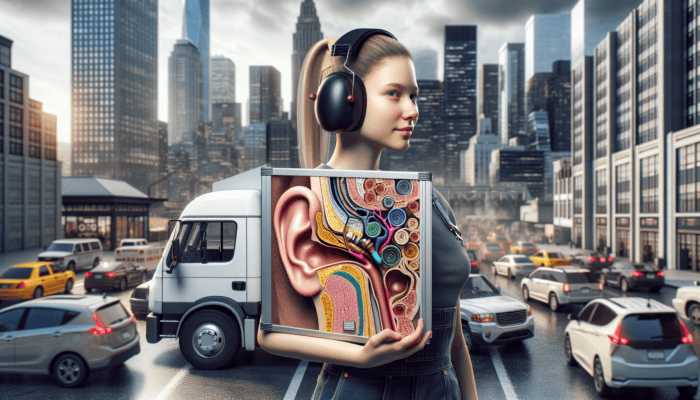
A delivery driver with noise-canceling headphones next to a truck, with an ear diagram showing hearing loss, in an urban setting.

Exploring the science behind hearing loss offers valuable insights into the physiological mechanisms involved and clarifies why delivery drivers face hearing risks. Understanding how noise impacts the ear and the different types of hearing loss can empower drivers to make informed choices regarding their health.

The Mechanisms of Noise Impacting the Ear

The human ear consists of complex structures that work collaboratively to facilitate the process of hearing. When sound waves enter the ear, they navigate through the ear canal, causing the eardrum to vibrate. These vibrations are transmitted to the inner ear, where delicate hair cells convert them into electrical signals interpreted by the brain as sound.

Excessive noise can overstimulate these hair cells. Continuous exposure to elevated sound levels can damage or even destroy them, leading to hearing loss. This concern is particularly relevant for delivery drivers who spend prolonged hours in noisy environments. Over time, this acoustic trauma accumulates, resulting in a gradual decline in hearing ability that may go unnoticed until it reaches a severe level.

Understanding the Different Types of Hearing Loss

Hearing loss is not uniform; it can manifest in various forms. The two predominant types are sensorineural and conductive hearing loss. Sensorineural hearing loss occurs due to damage to the inner ear or auditory nerve, often resulting from prolonged exposure to loud noises. This type is typically permanent and cannot be medically reversed.

Conversely, conductive hearing loss arises when sound waves struggle to travel effectively through the outer or middle ear, often due to blockages or infections. Though this type of hearing loss can sometimes be treated, delivery drivers are particularly at risk for developing sensorineural hearing loss due to their consistent exposure to hazardous noise levels.

The Long-Term Cumulative Effects of Noise Exposure

A delivery driver with noise-canceling headphones amidst sound waves and city noise, showing stress and fatigue.

The cumulative effects of noise exposure warrant serious consideration. While the auditory system is resilient, it has its limits. Each delivery shift exposes drivers to noise levels that can accumulate, leading to significant health challenges over time. Studies suggest that even brief daily exposure to loud sounds can result in long-lasting damage if not appropriately managed.

For delivery drivers, the ramifications of cumulative noise exposure extend beyond hearing loss. Many experience challenges with focus, increased irritability, and even symptoms resembling anxiety or depression. These effects underscore the necessity of prioritizing hearing health and implementing preventative measures to mitigate risks effectively.

Implementing Effective Strategies to Reduce Hearing Risks

Although the risks associated with being a delivery driver are substantial, practical solutions exist that can significantly lower the likelihood of hearing damage. By employing hearing protection strategies, modifying vehicles, and prioritizing regular hearing check-ups, drivers can take control of their auditory health.

The Importance of Hearing Protection Devices

One of the most effective strategies to safeguard against hearing loss is the use of hearing protection devices. Various types of earplugs and earmuffs are available, each tailored to reduce sound levels while still allowing for essential communication. For instance, custom-fitted earplugs provide an exceptional level of comfort and protection, making them suitable for prolonged periods on the road.

Moreover, earmuffs designed with noise-canceling technology can offer substantial defense against engine and road noise. These devices not only help preserve hearing but also enhance overall comfort by minimizing auditory distractions. Delivery drivers should consider investing in high-quality hearing protection to create a safer auditory environment.

Vehicle Modifications to Mitigate Noise Levels

Another effective approach involves implementing vehicle modifications that can lower noise levels. Simple soundproofing techniques can markedly decrease the intrusion of external noise. Adding insulation materials to the vehicle’s interior, sealing any gaps, and utilizing quieter tires can all contribute to a more tranquil driving experience.

In addition, selecting newer models of delivery vehicles designed with sound reduction features can offer long-term benefits. Many manufacturers are now prioritizing noise reduction in their vehicle designs, enabling drivers to minimize their exposure to harmful sound levels effectively.

Prioritizing Regular Hearing Check-ups for Early Detection

Routine audiometric testing is vital for the early detection of hearing loss. Drivers should make it a priority to have regular hearing check-ups, allowing for timely interventions if any issues arise. Audiologists can provide valuable insights into a driver’s auditory health and suggest appropriate actions based on individual assessments.

By proactively monitoring their hearing health, delivery drivers can make informed decisions about their auditory protection strategies. Regular check-ups not only facilitate the early identification of potential challenges but also empower drivers to maintain their quality of life both on and off the road.

Insights from Industry Experts on Hearing Risks Faced by Delivery Drivers

To deepen the understanding of the challenges delivery drivers encounter concerning hearing health, insights from industry experts prove invaluable. Audiologists, occupational health specialists, and affected drivers themselves offer a comprehensive perspective that highlights the critical need to address these risks.

Expert Insights from Audiologists Specializing in Occupational Hearing Loss

Audiologists with expertise in occupational hearing loss have observed a concerning trend among delivery drivers. Many report a high incidence of hearing loss associated with the persistent noise exposure these drivers face on a daily basis. These professionals stress the importance of raising awareness and taking proactive measures to mitigate risks effectively.

Through interviews, numerous audiologists have underscored the significance of educating drivers about the long-term ramifications of noise exposure. They advocate for tailored hearing conservation programs designed specifically for delivery drivers, emphasizing that awareness of the risks is the first crucial step toward prevention.

Case Studies Highlighting the Experiences of Affected Drivers

Real-life accounts from affected drivers vividly illustrate the impact of hearing loss on their lives. Many drivers share experiences of struggling to communicate with colleagues or missing crucial auditory cues while on the road. These challenges not only affect their professional performance but also have repercussions on their personal relationships and overall quality of life.

Case studies reveal that the emotional burden of hearing loss can be profound. Drivers often experience feelings of isolation, frustration, and anxiety as they navigate a world that can become increasingly challenging to engage with. These narratives emphasize the urgent need for preventative measures within the industry.

Recommendations from Occupational Health Specialists for Improved Hearing Safety

Occupational health specialists play a pivotal role in establishing best practices for managing hearing health in the delivery sector. Their recommendations frequently include comprehensive hearing conservation programs, employer-sponsored training on noise exposure risks, and the provision of adequate hearing protection for drivers.

Additionally, specialists advocate for the integration of hearing health into broader workplace safety protocols. By prioritizing auditory health alongside physical safety measures, companies can create a culture of well-being that benefits both drivers and the organizations they work for.

Emerging Technologies in Hearing Protection for Delivery Drivers

As technology advances, innovative solutions for hearing protection are emerging, specifically tailored for delivery drivers. These developments aim to enhance comfort, effectiveness, and usability, ensuring that drivers can protect their hearing without sacrificing their work performance.

Innovative Designs in Hearing Protection Devices

Recent advancements in hearing protection devices have led to remarkable innovations in the market. New earplug designs utilize advanced materials and technologies that enhance comfort and noise attenuation. Some models even offer adjustable noise cancellation, allowing drivers to customize their level of protection according to their environment.

Earmuffs equipped with Bluetooth technology have also gained traction, enabling drivers to communicate effortlessly while still safeguarding against harmful noise levels. These innovations not only improve safety but also enhance connectivity, allowing drivers to maintain contact with colleagues and dispatchers seamlessly.

Smartphone Applications for Monitoring Noise Exposure

In today’s digital age, smartphone applications have transformed the way delivery drivers can monitor their noise exposure. Various apps provide real-time data on ambient noise levels, empowering drivers to remain aware of their surroundings and adjust their behaviors accordingly.

These applications can alert drivers when noise levels exceed safe thresholds, prompting them to take appropriate action, whether by using hearing protection or altering their route. By harnessing technology, drivers can take proactive steps to protect their hearing health while performing their duties.

Integration of Noise Reduction Technologies in Vehicle Systems

Emerging vehicle technologies are also focusing on minimizing noise levels. Manufacturers are incorporating sound-dampening materials and advanced engineering designs aimed at reducing cabin noise. This trend not only enhances the driving experience but also contributes to the long-term auditory health of drivers.

Future vehicles may feature integrated noise-canceling systems that actively reduce unwanted sounds, creating a quieter and safer environment for delivery drivers. Such innovations represent a significant advancement in addressing the reasons delivery drivers face hearing risks.

Understanding the Legal Rights and Protections for Delivery Drivers Facing Hearing Risks

Being aware of legal rights and protections is crucial for delivery drivers who face hearing risks. Familiarity with workers’ compensation, employer responsibilities, and available support resources empowers drivers to advocate for their health and safety.

Navigating Workers’ Compensation Claims for Hearing Loss

Workers’ compensation claims related to hearing loss can be intricate, yet they are essential for drivers who have sustained auditory damage due to their work environment. Understanding eligibility criteria and the claims process is vital for those seeking compensation for their hearing-related challenges.

It is essential for drivers to meticulously document their experiences and any related medical treatments. This documentation can prove invaluable when filing claims, ensuring that drivers receive the necessary support to address their hearing health concerns.

The Legal Obligations of Employers in Protecting Workers

Employers bear a legal responsibility to provide a safe working environment for their employees, including implementing measures to guard against excessive noise exposure. This obligation includes adhering to OSHA regulations and establishing hearing conservation programs to minimize associated risks.

Employers should conduct regular assessments of noise levels in delivery vehicles and provide suitable hearing protection to their drivers. By fulfilling these responsibilities, companies can foster a culture of safety that prioritizes the well-being of their workforce.

The Role of Advocacy and Support Groups in Driver Hearing Health

Numerous advocacy and support groups exist to assist delivery drivers who face hearing issues. These organizations provide resources, education, and legal assistance to help drivers navigate their rights and access necessary support systems.

By connecting with advocacy groups, drivers can find a community of individuals who understand their challenges and can offer guidance. These networks play a pivotal role in raising awareness about hearing health and advocating for improved protections within the industry.

The Importance of Training and Education in Preventing Hearing Loss

Training and education are fundamental to preventing hearing loss among delivery drivers. By equipping individuals with knowledge about the risks associated with noise exposure, companies can cultivate a culture of safety and awareness.

Essential Educational Programs for Drivers

Comprehensive educational programs addressing the risks of noise exposure are vital for delivery drivers. These programs should encompass the mechanics of hearing loss, the significance of hearing protection, and effective strategies for minimizing noise exposure on the job.

Employers should prioritize ongoing training sessions to ensure that drivers stay informed about best practices for protecting their hearing. By fostering a knowledgeable workforce, companies can considerably reduce the incidence of hearing loss among their drivers.

Integrating Hearing Health into Existing Safety Protocols

Incorporating hearing health into current safety protocols is a proactive step that companies can take to safeguard their drivers. This includes integrating hearing protection policies into safety training and providing resources concerning noise exposure risks.

By prioritizing hearing health, companies can demonstrate their commitment to the well-being of their drivers. This not only enhances safety but also promotes a positive workplace culture that values employee health.

Awareness Campaigns to Promote Hearing Health

Awareness campaigns are crucial for raising consciousness about hearing health among delivery drivers. Companies can implement initiatives that highlight the importance of protecting one’s hearing and provide practical tips for reducing noise exposure.

By utilizing various communication channels, including newsletters, social media, and workplace meetings, companies can effectively reach their drivers and encourage proactive measures. These campaigns can significantly contribute to changing behaviors and increasing awareness of the reasons delivery drivers face hearing risks.

Emerging Trends and Research in Delivery Driver Hearing Health

As discussions around delivery driver hearing health evolve, ongoing research and emerging technologies continue to shape the landscape. Understanding these trends is essential for both drivers and employers.

Current Research Projects Focusing on Occupational Hearing Loss

Current studies examining occupational hearing loss among delivery drivers are shedding light on the extent of the issue and potential solutions. Researchers are investigating the correlation between noise exposure and hearing loss, providing valuable insights that can inform targeted interventions.

By participating in research initiatives, delivery drivers can contribute to a deeper understanding of the challenges they face. This collaboration between the industry and academic institutions can ultimately lead to enhanced safety standards and improved protection for drivers.

Innovative Technologies Paving the Way for Better Hearing Protection

The future holds promise for groundbreaking technologies that could transform hearing protection for delivery drivers. Advancements in materials science may result in the development of lighter, more comfortable hearing protection devices with superior sound attenuation capabilities.

Additionally, smart hearing protection devices that integrate with mobile technology may provide drivers with real-time feedback on their noise exposure levels, enabling immediate adjustments to their behavior.

Potential Policy Changes and Advocacy Initiatives

As awareness of hearing health issues continues to grow, potential policy changes may arise to better protect delivery drivers. Advocacy efforts aimed at strengthening regulations governing occupational noise exposure could lead to enhanced safeguards for workers in the industry.

By collaborating with regulatory bodies and advocacy organizations, the delivery sector can work towards establishing stricter standards that prioritize the auditory health of drivers. These collective efforts can pave the way for a safer and healthier work environment.

Personal Stories and Testimonials: The Realities of Hearing Risks for Delivery Drivers

Personal anecdotes and testimonials from delivery drivers provide compelling insights into the lived experiences of those affected by hearing loss. These narratives highlight the profound impact of auditory health on both personal and professional spheres.

Anecdotes from Long-Term Drivers on Hearing Health Challenges

Long-term drivers often possess unique perspectives on the challenges associated with hearing health in the delivery industry. Many recount their gradual realization of changes in their hearing abilities, often attributing these changes to years of persistent noise exposure.

These stories underscore the critical importance of proactive measures and ongoing education about hearing protection. By sharing their experiences, long-term drivers can motivate others to prioritize their auditory health and take necessary precautions.

The Impact of Hearing Loss on Quality of Life for Drivers

Hearing loss can significantly diminish the quality of life for delivery drivers. Many struggle with communication challenges, resulting in difficulties in both personal relationships and workplace interactions. The social isolation that often accompanies hearing loss is a common theme among affected drivers.

These impacts extend beyond professional life, influencing overall mental and emotional well-being. Recognizing the far-reaching implications of hearing loss reinforces the importance of preventative measures and early intervention strategies.

Success Stories: Prevention and Proactive Measures

Despite the challenges posed by hearing loss, numerous success stories highlight drivers who have effectively managed to protect their hearing. By utilizing hearing protection devices, making informed choices about their work environments, and prioritizing regular check-ups, these drivers have minimized their risk of hearing loss.

These success stories serve as powerful reminders that proactive measures can lead to positive outcomes. By sharing their journeys, these drivers inspire others to take charge of their hearing health and advocate for safer working conditions within the delivery industry.

Frequently Asked Questions

What are the primary sources of noise encountered by delivery drivers?

The main sources of noise for delivery drivers include engine noise, road noise, and traffic sounds, all of which significantly contribute to hearing risks.

How does extended noise exposure affect hearing health?

Prolonged exposure to high noise levels can lead to permanent hearing damage, with symptoms often developing gradually over time.

What types of hearing loss are commonly experienced by delivery drivers?

Delivery drivers predominantly experience sensorineural hearing loss due to damage to the inner ear, though conductive hearing loss can also occur.

What effective hearing protection devices are available for drivers?

Effective hearing protection devices include custom earplugs, earmuffs with noise-canceling features, and innovative designs focused on comfort.

How can drivers effectively reduce noise levels in their vehicles?

Drivers can lower noise levels in their vehicles by implementing soundproofing techniques, utilizing quieter tires, and opting for vehicles equipped with noise reduction features.

Why is it essential for drivers to undergo regular hearing testing?

Regular hearing testing enables drivers to monitor their auditory health, facilitating early detection of issues and timely interventions.

What legal rights do delivery drivers possess regarding hearing loss?

Delivery drivers have the right to file workers’ compensation claims for hearing loss resulting from occupational noise exposure, and employers are obligated to provide a safe working environment.

How can employers support drivers in preventing hearing loss?

Employers can assist drivers by implementing hearing conservation programs, offering training on noise exposure risks, and supplying adequate hearing protection.

What role do advocacy groups play in supporting driver hearing health?

Advocacy groups offer resources, education, and assistance for drivers facing hearing issues, aiding them in navigating their rights and accessing necessary support.

What future trends are anticipated in hearing protection for delivery drivers?

Future trends may include advancements in hearing protection technology, smart devices for monitoring noise exposure, and potential policy changes to enhance noise exposure regulations.

Explore our journey on X!

The post English Language Mastery: Tips for Success in Learning appeared first on The Microsuction Ear Wax Removal Network.